Van Recovery for Delivery Drivers: Breakdown Cover Guide
Last Updated: November 5, 2026
Quick Summary
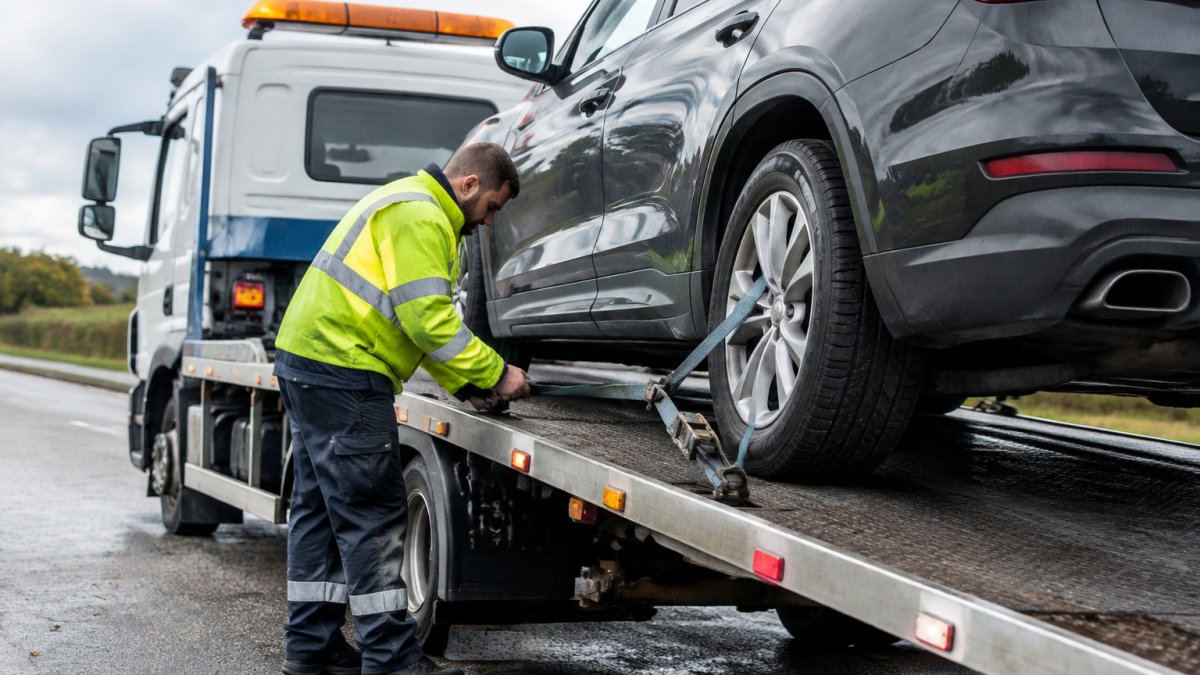
Van recovery is the process of moving a broken-down, accident-damaged or non-running commercial vehicle to a safe destination, such as a local garage or your home address, using a recovery vehicle and trained recovery driver. For delivery drivers, the first priority at a breakdown is personal safety, not the parcel, so pull over safely, switch on hazard lights and put on a high-visibility vest before calling your recovery provider with your exact location and vehicle details.
Pull over safely, switch on hazard lights and put on your high-visibility vest before leaving the cab.
Lock the cab and load doors before you move to safety.
Tell dispatch your location, how long you will be off the road and which deliveries are on board.
Check that business use is included as standard, not as a paid add-on.
Gales Recovery commits to a 45-minute response time for van recovery.
Table of Contents
Why Van Recovery Matters More for Delivery Drivers
A delivery van that will not start is not just an inconvenience. It is a stopped income stream, a route full of waiting customers and a vehicle sitting exposed on a verge.
The scale of exposure is easy to underestimate. A courier van may cover several hundred miles a week on business use, often on tight schedules and unfamiliar roads.
What to Do When a Delivery Van Breaks Down
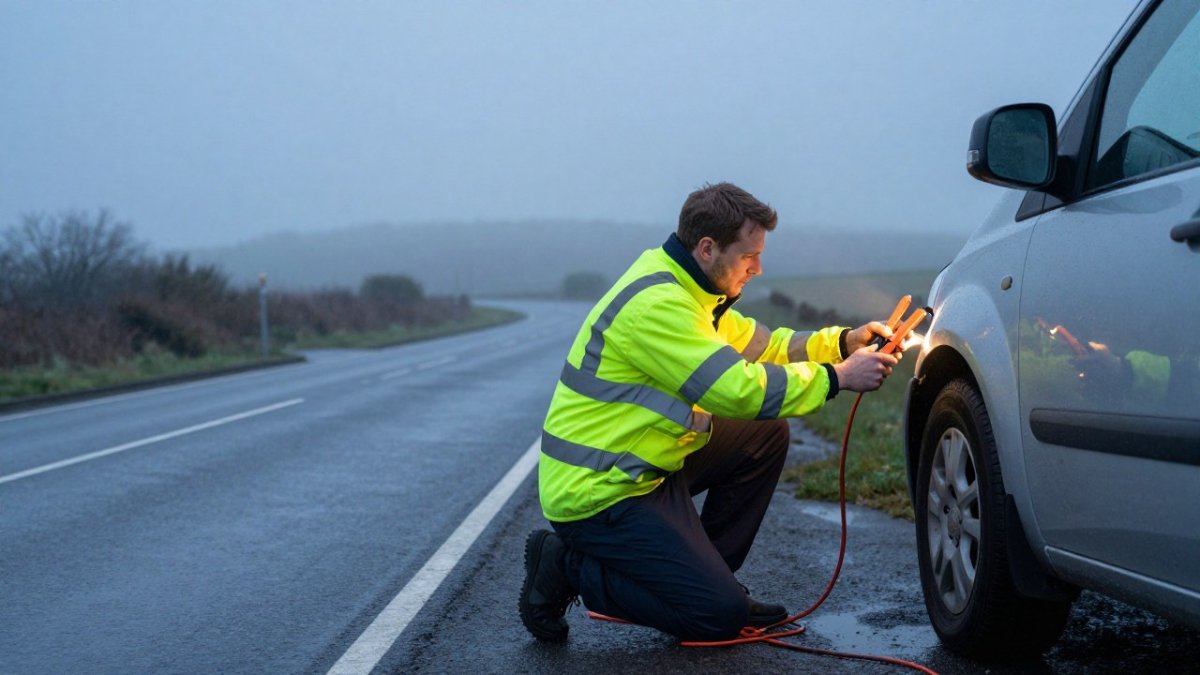
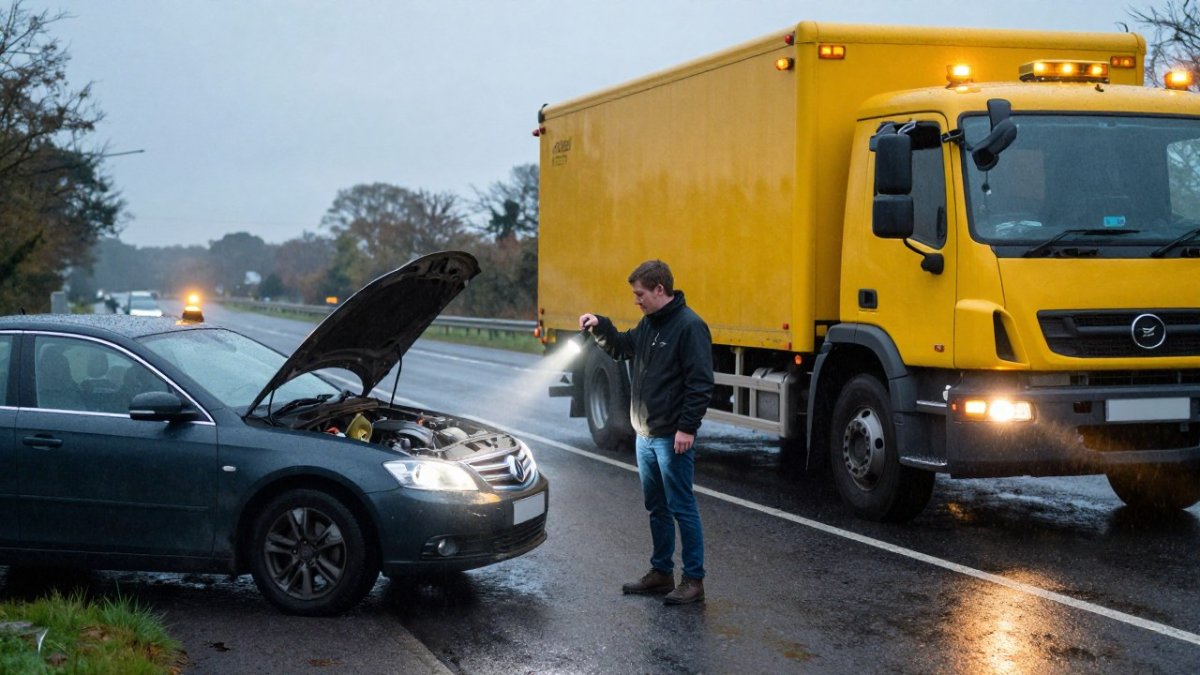
When a delivery van breaks down, the first priority is personal safety, not the parcel. Move the vehicle as far off the carriageway as possible, switch on hazard lights, put on a high-visibility vest and place a warning triangle where it is safe to do so. Then call your recovery provider with your exact location and vehicle details.
A common mistake is standing between the van and moving traffic while waiting. Do not do it. Get behind a barrier or well onto the verge.
A Breakdown-Response Checklist for Drivers
Work through this in order:
Pull over safely and switch on hazard lights
Put on your high-visibility vest before leaving the cab
Place a warning triangle behind the vehicle if it is safe
Note your location: road, direction, nearest junction or marker post
Call your recovery provider or fleet contact with van size and load details
Tell dispatch so deliveries can be reassigned
Stay clear of the carriageway until the recovery vehicle arrives
If you need help now, you can book emergency vehicle recovery online and give the operator your location, van size and whether the vehicle is accident-damaged. For a full walkthrough of the booking process, see our step-by-step guide to booking recovery.
Securing the Load and the Vehicle
A loaded delivery van adds two risks a private car does not have: the load itself and the temptation to leave the vehicle unattended. Before you step away, lock the cab and close the load doors if it is safe to do so. If the van is carrying high-value parcels, tell the recovery operator and your dispatch contact so the vehicle is prioritised and, where possible, kept in sight until it is collected.
Lock the cab and load doors before you move to safety.
Communicating with Customers and Dispatch
Once you are safe, the next job is the route. Call or message your dispatch contact with three pieces of information: your location, an estimate of how long you will be off the road, and which deliveries are still on board. Dispatch can then reassign nearby drops, rebook time slots and tell customers what has happened before they start chasing.
Where you have direct customer contact, a short, factual message with a new estimated time or a rebooked slot helps keep the customer informed.
Getting the Van and the Deliveries Moving Again
Recovery does not have to mean the end of the route. Ask the operator whether the van can be recovered to a garage, and whether your cover includes onward travel or a replacement vehicle.

How a Breakdown Hits Routes, Customers and Earnings
A breakdown does not just cost the recovery fee. For a self-employed courier paid per delivery, a two-hour stoppage can wipe out a morning's weekly earnings. Missed delivery slots damage customer relationships, and repeated lateness can affect the ratings that many platforms use to allocate work.
Fleet managers face a different calculation. Vehicle downtime means idle drivers, rescheduled delivery routes and unhappy clients. The practical fix is recovery coordination: a single number that dispatches recovery, informs dispatch software and arranges vehicle transport to a garage, so the rest of the fleet keeps moving.
Courier Van Breakdown Cover: What Your Policy Must Include
Standard private breakdown cover often excludes commercial use, so check the policy wording before you rely on it.
Look for these core elements:
Roadside assistance and roadside repair for faults that can be fixed at the kerb
Vehicle recovery and vehicle towing to a local garage or home address
Nationwide recovery if you travel beyond your usual delivery route
Accident recovery for accident-damaged vehicles that are not drivable
Cover for your van size, from short-wheelbase to long-wheelbase vans
Onward journey support so you are not stranded
The Policy Checklist: What to Confirm Before You Buy
Benefits lists look similar across providers; the differences sit in the limits and exclusions. Work through this checklist against any quote:
Vehicle weight and size limits. Confirm the policy covers your van's gross vehicle weight and dimensions, not just "a van". A long-wheelbase or high-roof van can fall outside a standard commercial policy.
Payload and loaded vehicles. Ask whether recovery is covered when the van is fully loaded. Some policies recover the vehicle but not a loaded one, or charge extra to tranship the load.
Business use. Check that delivery and courier work is included as standard, not as a paid add-on, and that subcontracted work is not excluded.
Home start. Confirm whether a breakdown on your own driveway is covered; many policies treat home start as an optional extra.
Towing distance. Check the included towing distance to a garage or your chosen destination, and the per-mile charge beyond it.
Callout limits. Note the number of callouts per year and whether there is a cap per incident.
Onward travel and replacement vehicle. Confirm what is provided if the van is off the road for more than a day, and whether a replacement van is suitable for delivery work.
Accident and non-running vehicles. Check that accident-damaged and non-running vehicles are covered, and whether recovery is direct-billed to your insurer.
Policy Exclusions and Cover Limits to Check
The exclusions matter as much as the benefits. Check the cover limits for towing distance, the number of callouts per year and whether the policy covers a fully loaded van. Confirm whether business use is included as standard or as an add-on.
Watch out: a policy that covers "vans" but caps the gross vehicle weight below your vehicle's plated weight will decline the claim at the roadside, so check the figure against your V5C before you pay.
Matching Cover to How You Work
A solo driver on a short-wheelbase van needs affordable business-use cover with nationwide recovery for longer runs. A small fleet needs fleet cover that can handle multiple callouts at once without leaving vehicles stranded.
If you run more than one van, our fleet recovery guide covers priority dispatch, downtime planning and how to coordinate recovery across several vehicles. Gales Recovery handles multiple callouts and offers direct billing to insurance companies, so you are not paying upfront and chasing reimbursement.
Van Recovery Response Time: What to Expect and How to Prepare
Van recovery response time is the period between your call and the recovery vehicle reaching you. It varies with traffic, weather and how remote your location is. Providers that publish a response commitment give you something to plan around; those that stay vague leave you guessing.
At Gales Recovery, we commit to a 45-minute response time, which lets a driver estimate how long the van will be off the road. For a realistic picture of what different conditions do to arrival times, read our guide to emergency roadside assistance response times.
Comparing Recovery Options and Likely Costs
Recovery pricing depends on distance, van size, time of day and whether the vehicle is accident-damaged. Ask what is included before you agree, and check Gales Recovery's website for current prices or a quote.
The main options break down like this:
Option | Best for | What to check |
Pay-per-use recovery | Occasional breakdowns | Callout fee, per-mile charge, waiting time |
Annual breakdown cover | Regular business use | Business use included, callout limits, towing distance |
Fleet cover | Several vans | Multiple callouts, priority dispatch, downtime terms |
Insurance-linked recovery | Accident-damaged vehicles | Direct billing, claim handling, approved repairers |
Ask directly which fees are legitimate and which are add-ons. Our guide to avoiding hidden recovery fees explains the charges worth questioning before you commit.
Cover for Solo Drivers, Small Fleets and Subcontracted Couriers
Cover should match how you work. A solo driver on a short-wheelbase van needs affordable business-use cover with nationwide recovery for longer runs. A small fleet needs fleet cover that can handle multiple callouts at once without leaving vehicles stranded.
If you run more than one van, our fleet recovery guide covers priority dispatch, downtime planning and how to coordinate recovery across several vehicles. Gales Recovery handles multiple callouts and offers direct billing to insurance companies, so you are not paying upfront and chasing reimbursement.
Preventive Maintenance for High-Mileage Delivery Vans
High-mileage vans fail in predictable ways. Tyres, brakes, batteries and cooling systems take the most punishment on stop-start delivery work, and a fault that would be minor on a car can strand a loaded van.
A simple weekly check catches most problems before they cause a breakdown:
Check tyre pressures and tread, including the spare
Test the battery and look for slow starting
Check coolant, oil and washer fluid levels
Listen for new noises from brakes or suspension
Book servicing on schedule, not when something fails
The cheapest recovery is the one you never need. Regular checks reduce road risk, protect driver safety and keep on-time deliveries on track.
Frequently Asked Questions
Does standard breakdown cover include courier use?
Often it does not. Many standard policies exclude vehicles used for commercial delivery, hire and reward, or courier work, so a claim could be refused after a van breakdown. Check the policy wording for business use and courier van breakdown cover before you buy. If you deliver for a platform or run your own rounds, tell the provider exactly how the van is used and get confirmation in writing. Cover that names commercial use is the safer choice.
Can a recovery service take a van and its delivery load?
Most recovery operators can move a non-running vehicle with its load still inside, but you should say what you are carrying when you call. Heavy, high-value or hazardous items may need separate arrangements, and some policies set cover limits on loads. Secure the load before the recovery vehicle arrives, remove anything valuable, and confirm with the recovery operator that the van will be transported loaded. For multi-drop rounds, ask whether parcels can stay on board to your depot or home address.
How quickly can a recovery vehicle reach a broken-down van?
Van recovery response time depends on your location, traffic and how busy the operator is. Gales Recovery commits to a 45-minute response time. When you call, give your exact location and van size so the recovery driver can find you. Ask for an estimated arrival time and a contact number.
Can I claim van recovery costs through business insurance?
Sometimes. Many business motor policies include roadside assistance or recovery as an add-on, and some will reimburse recovery costs if you keep the invoice and a breakdown report. Check your policy exclusions first, because wear-and-tear breakdowns are often excluded. Gales Recovery offers direct billing to insurance companies. Confirm with your insurer before authorising recovery so there is no dispute later.
A breakdown on a delivery route tests your planning, your cover and your patience all at once. Gales Recovery provides 24/7 vehicle recovery and roadside assistance with a 45-minute response commitment, accident recovery for damaged vehicles, direct billing to insurance companies and fleet support for multiple callouts. Get started with Gales Recovery and keep your deliveries moving, whatever the road throws at you.
Comments