How to Find Reliable Vehicle Recovery You Can Trust
Last Updated: November 4, 2026
Quick Summary
To find reliable vehicle recovery, verify the operator's licensing, insurance and driver training before you book, and get the full price confirmed in writing. Ask where their nearest vehicle is, what the call-out fee includes, and whether they charge extra for out-of-hours work. A provider who will not put answers in writing is a warning sign.
Ask whether the operator's insurance covers recovery and transportation of third-party vehicles.
A mobile number and a first name only is a warning sign, not a shortcut.
Get the price confirmed in writing or by text message before the vehicle is dispatched.
Confirm 24/7 availability by calling at an awkward hour to see if a real person answers.
Gales Recovery operates 24/7 with a 45-minute response time commitment.
Table of Contents
Start With Licensing, Insurance and Vetted Drivers
Finding reliable vehicle recovery starts with verification, not price. A vehicle recovery operator should be able to prove its drivers are trained, its vehicles are insured for recovery work, and its business is properly registered before you let anyone near your car.
Most drivers book the first number they find. That is a mistake worth avoiding. Choosing well comes down to a few checks you can make before booking.
Ask for the operator's insurance details. Specifically, you want to know whether they hold insurance that covers recovery and transportation of third-party vehicles, and whether that cover is appropriate for the work being done.
Then ask about driver competence. Recovery work involves winching, loading onto a flatbed truck, and securing a vehicle safely. A professional operator will describe how their drivers are trained and what equipment they carry.
Finally, confirm the business is registered and traceable. A legitimate recovery service has a registered company name and number, a physical base, and a landline or tracked contact line. Watch out: a mobile number and a first name only is a warning sign, not a shortcut.
What to Ask a Recovery Company Before You Book
Before you commit, run through a short set of questions. The answers tell you more about reliability than any advert will. But the value is in knowing what a good answer sounds like, and what should make you hang up.
Start with location and response. Ask: "Where are you based, and how far away is your nearest vehicle right now?" A confident operator will give you a town or depot name and an estimated drive time.
Next, pin down the price. Ask: "What is your call-out fee, and what exactly does it include?" You want to hear that the fee covers a set mileage radius, loading, and winching if needed.
Ask about capability for your specific situation. "Can you handle a non-drivable vehicle?" Accident recovery and breakdown recovery need different equipment, a flatbed with a winch and secure tie-downs for a car with damaged wheels, for example.
Ask about billing and paperwork. "Do you bill my insurer directly, and will I get a written quote or job sheet before you set off?" Direct billing saves you paying upfront and chasing reimbursement, but only if the operator has an agreement with your insurer.
Write the answers down or ask them to text you a summary. A provider who is reluctant to put anything in writing is telling you something important.
Car Recovery Cost: What Drives the Quote
Car recovery cost depends on distance, vehicle type, time of day, and how difficult the vehicle is to move. Pricing depends on these factors, so ask for a quote specific to your journey. To compare quotes fairly, you need to understand how each factor is priced and what a full breakdown should include.
Here is what actually moves the number up or down, and the questions that expose the difference between a headline figure and the final invoice:
Factor | Effect on Quote | What to Ask |
Towing distance | Longer distance, higher cost; often a base fee plus a per-mile rate beyond a set radius | Is mileage included up to a certain distance, and what is the per-mile rate after that? |
Vehicle type | Vans, larger cars, and modified vehicles cost more than small cars; electric vehicles may need specific handling | Is there a size or weight surcharge, and does my vehicle type affect the price? |
Time of day | Out-of-hours, weekends, and bank holidays often carry a premium | What is the after-hours rate, and does it apply to the whole job or just the call-out? |
Access difficulty | Motorway, multi-storey, or off-road recovery takes longer and may need winching | Is winching included, and do you charge extra for restricted access or recovery from a car park? |
Destination | Garage, home, or storage; storage incurs daily charges | Do you charge for storage, and what is the daily rate if the destination is closed? |
Onward travel | If your car cannot be repaired quickly, you may need a taxi or hire car | Do you arrange onward travel, and is it included or extra? |
A common concern with recovery pricing is the gap between a phone quote and the final invoice. Operators should explain their charges upfront and put them in writing.
When comparing quotes, do not compare the headline figure alone. Compare the total for your specific journey: the same distance, the same vehicle, the same time of day, and the same destination. A quote that looks cheap may exclude winching or charge a high per-mile rate after the first few miles.
Payment methods matter too. If you want to understand which fees are standard and which are not, read our guide on how to avoid hidden recovery fees before you agree to anything.
Pricing varies by operator and circumstances, so ask for a full breakdown rather than a headline figure. For current prices or a quote, contact Gales Recovery directly.
Vehicle Recovery Response Time and 24/7 Availability
Vehicle recovery response time is the measure that matters most when you are stranded. A quoted arrival window is only useful if the operator can actually meet it, so ask what happens when they are busy.
Breakdowns do not keep office hours, so round-the-clock availability matters. Confirm 24/7 availability by calling the number at an awkward hour and seeing whether a real person answers.
Ask two specific questions:
What is your average response time in my area? Not a national average, but locally.
How do you handle peak demand? A serious operator should be able to explain how it handles busy periods.
If you want a realistic benchmark for how quickly roadside assistance should reach you, our article on emergency roadside assistance response time expectations sets out what to expect.
Your Vehicle Recovery Checklist Before Booking
Use this checklist every time you book a recovery service. It takes two minutes and protects you from the most common problems.
Confirm the operator's registered company name and number
Ask for proof of motor trade insurance covering third-party vehicles
Get the full price confirmed in writing, including mileage and call-out fee
Confirm whether out-of-hours charges apply
Ask for the estimated arrival time and the driver's name
Confirm the destination address and any storage charges
Check whether they bill your insurer directly
Save the operator's number and your booking reference
A practical verification checklist like this is what separates a confident booking from a hopeful one. Keep it saved on your phone.
Check Capability, Coverage Area and Customer Reviews
Capability, coverage, and reputation are the three filters that narrow your shortlist to one. Check them in that order.
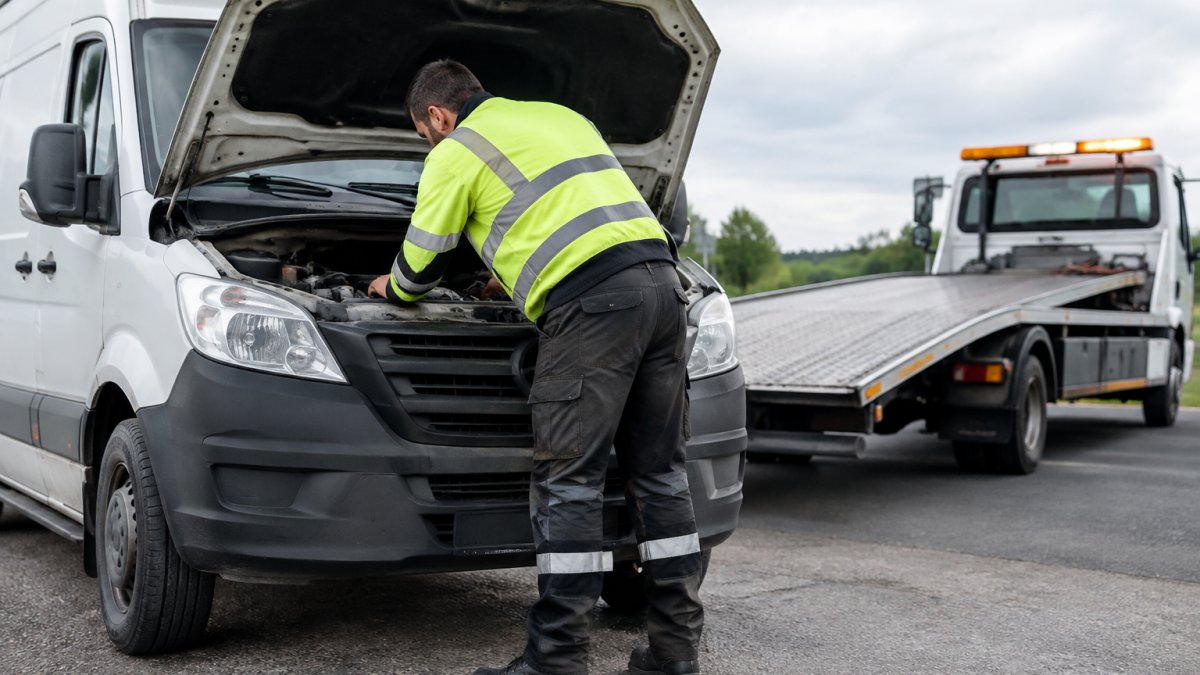
Capability means matching equipment to your vehicle. A flatbed truck is a common choice for moving cars, including those with damaged wheels or transmissions. Winching is needed if your car has left the road. Motorcycles, vans, and low-clearance cars each need specific handling, so state your vehicle type when you call.
Coverage means the operator actually serves your area. A national brand may subcontract to a local provider, which is fine, but ask who is coming and how far they are travelling. Rural locations need a clear answer on access.
Reviews are useful when you read them properly. Look for comments about arrival times, final pricing, and how the driver handled the vehicle. A handful of detailed reviews beats a wall of five-star ratings with no text.
The Citizens Advice guidance on resolving problems with a service is worth knowing if a booking goes wrong and you need to escalate a complaint.
What to Do at the Roadside While You Wait
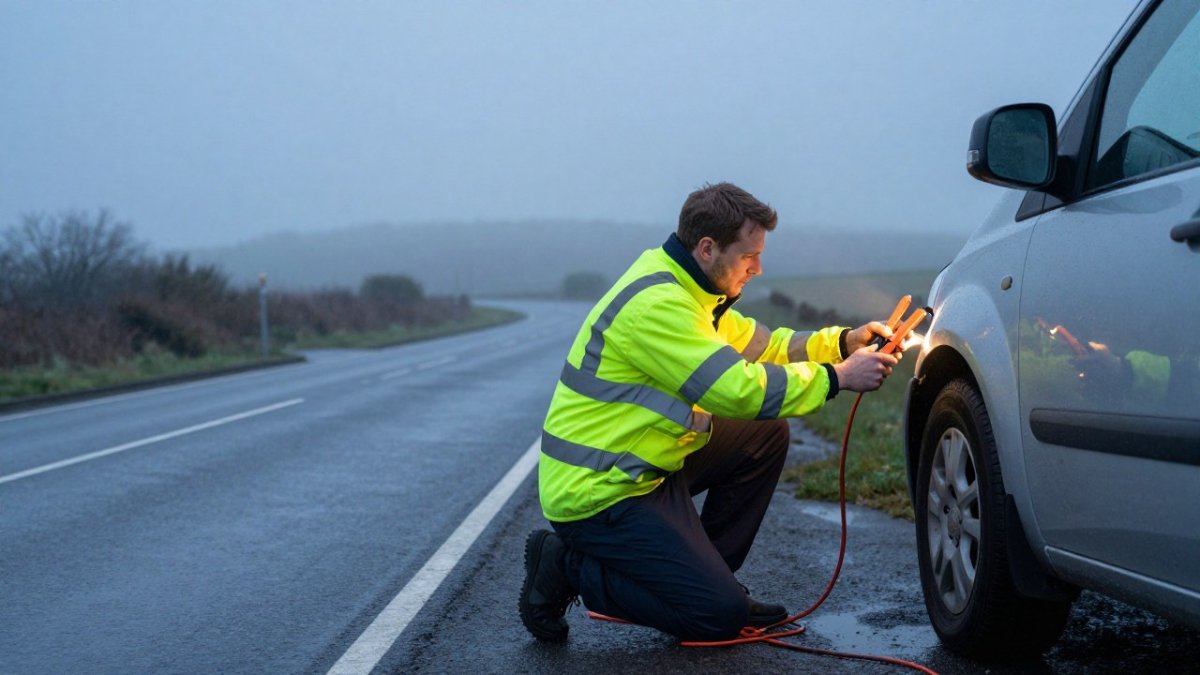
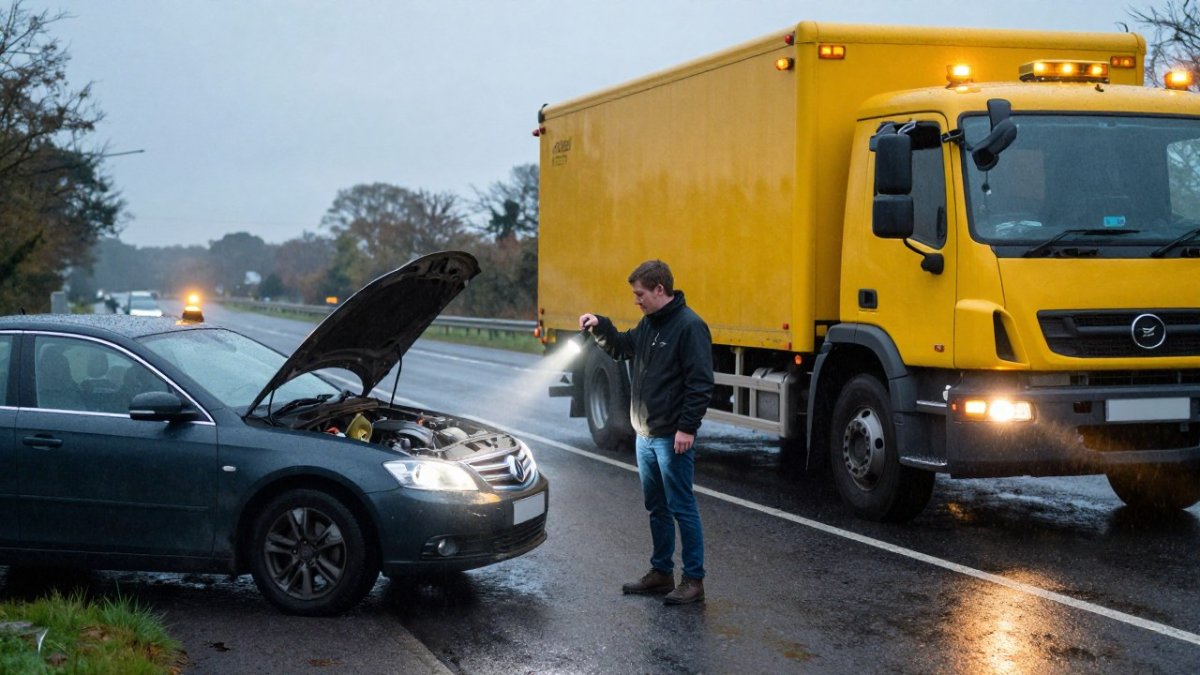
Safety comes before everything else once you have called for help. Move yourself and any passengers behind a barrier or well away from the carriageway, and leave the vehicle if it is safe to do so (Driving on motorways).

The man is British.
Turn on your hazard lights and, if you carry one, place a warning triangle well behind the vehicle on a straight road. Do not attempt repairs on a live carriageway. Do not stand between your car and traffic.
While you wait, keep your phone charged and stay reachable. Note the road name, direction of travel, and nearest marker post or junction so the driver can find you. This matters most in rural areas where postcodes cover wide distances.
If you want to understand what a fast local recovery looks like from dispatch to arrival, our guide on fast car recovery near me walks through the process.
Book Your Vehicle Recovery With Gales Recovery
Reliable recovery comes down to verification, clear pricing, and a response you can plan around. At Gales Recovery, we aim to meet these expectations.
We operate 24/7 with a 45-minute response time commitment, so you know what you are waiting for. Our team handles both breakdown and accident recovery, including vehicles that cannot be driven, and we offer direct billing to insurance companies so you are not left paying upfront and chasing reimbursement. For event organisers, we also provide comprehensive event services including road clearance.
If you would rather see the process before you call, our step-by-step guide shows you how to book emergency vehicle recovery online. When you are ready, book your vehicle recovery with Gales Recovery and get a clear price and arrival time before dispatch.
Frequently Asked Questions
How do I choose a reliable vehicle recovery service?
Check licensing, insurance and whether drivers are vetted before anything else, then confirm the provider covers your location and vehicle type. Ask about response time commitments and whether the quote is fixed or open-ended. Look at customer reviews for patterns rather than single comments, and get the price in writing before you agree. A provider that answers these questions clearly and promptly is usually the safer choice when your car is stranded.
How much does car recovery usually cost?
Car recovery cost depends on distance, vehicle type, time of day and whether the vehicle is drivable. A short local tow costs less than a long-distance transport or an accident recovery requiring winching. Ask for a full breakdown of the call-out fee and any add-ons before booking, and confirm whether the price is fixed. Gales Recovery can confirm current pricing and provide a quote for your situation.
How long does vehicle recovery take to arrive?
Response time varies by provider, location and demand, so ask for a stated commitment rather than a vague estimate. Gales Recovery commits to a 45-minute response time, which gives you a clear expectation when booking. Rural locations can take longer, so give accurate directions and a landmark when you call. Confirm the arrival estimate on the phone and keep your number reachable while you wait.
Does breakdown cover include vehicle recovery?
Many breakdown cover policies include recovery to a garage or home, but the level varies by policy and provider. Check your policy documents for towing distance limits, whether home transport is included, and whether accident recovery is covered separately. Some providers, including Gales Recovery, offer direct billing to insurance companies, which means you may not need to pay upfront and claim back. Confirm the details with your insurer before you book.
Breakdowns and accidents rarely happen at a convenient moment, and the operator you choose decides how the next few hours go. Gales Recovery provides 24/7 vehicle recovery and roadside assistance with a 45-minute response time commitment, accident recovery for non-drivable vehicles, and direct billing to insurance companies. Get started with Gales Recovery and arrange recovery with a clear price and a firm arrival window.
Comments