Emergency Recovery for Rural Hampshire Roads: What to Do
Table of Contents
Emergency Recovery for Rural Hampshire Roads: First Steps
What to Do After a Car Accident on a Country Lane
Securing the Scene and Checking for Injuries
Exchanging Details and Reporting the Incident
Roadside Breakdown Safety While You Wait
How Recovery Truck Response Time Works in Rural Areas
Vehicle Recovery Insurance Cover: What to Check
What Information to Give When You Call for Recovery
Emergency Recovery for Rural Hampshire Roads: When to Call
Frequently Asked Questions
Last Updated: October 18, 2026
Emergency Recovery for Rural Hampshire Roads: First Steps
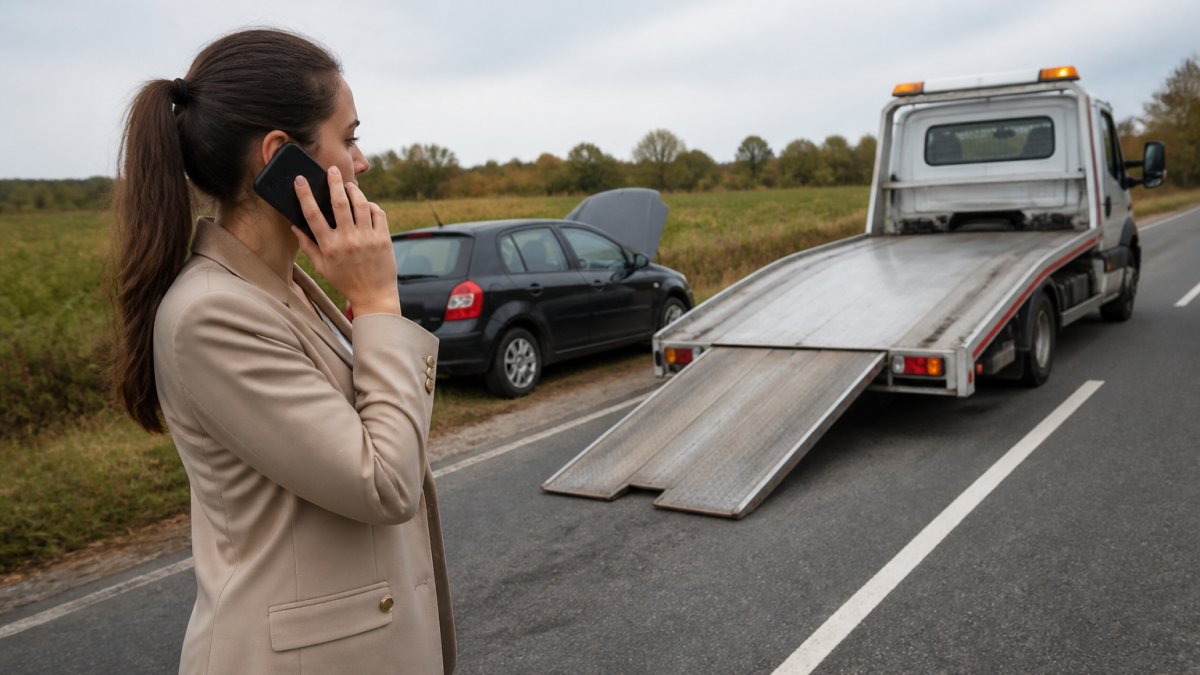
A broken-down car on a single-track lane is a different problem from a breakdown on the M3. There is no hard shoulder, no lighting, and often no phone signal. Emergency recovery for rural Hampshire roads starts with three things: get yourself and any passengers somewhere safe, make the vehicle visible, and call a recovery operator who knows the lanes rather than just the postcode. This guide from Gales Recovery sets out exactly what to do, in order, so a bad afternoon doesn't become a dangerous one.
The order matters. Most people reach for the phone first. On a narrow country lane with blind bends, that is the wrong sequence.
Watch Out Standing behind your car while you describe your location to a call handler is how people get hit. On an unlit lane with a 60 mph limit, a following driver sees your vehicle late. Get behind the barrier or up the bank before you dial.
What to Do After a Car Accident on a Country Lane
What to do after a car accident begins with the same principle every time: protect people before property. Switch off your engine, turn on your hazard lights, and get everyone out of the vehicle on the side away from moving traffic. Then check for injuries before you think about insurance, paperwork or who was at fault.
Securing the Scene and Checking for Injuries
On a rural road, "securing the scene" means working with what you have. Put your warning triangle out only if it is safe to walk, and only where traffic will actually see it, which on a blind bend may be further back than feels natural. Keep passengers well clear of the carriageway and off the road entirely if there is a verge or gateway.
Check everyone for injuries, including yourself. Shock can mask pain, so ask each person directly whether they are hurt rather than assuming silence means they are fine. Call 999 if anyone is injured, if the road is blocked, or if there is a spill or fire risk. The official guidance on what to do after a collision is clear that you must stop, exchange details and report the incident to the police if details are not exchanged.
Exchanging Details and Reporting the Incident
You are legally required to give your name, address and vehicle registration to anyone with reasonable grounds to ask for them (Vehicle insurance: If you’re in an accident). Ask for the same in return, plus their insurer's name and policy number. Photograph the position of both vehicles, the road layout and any damage before anything is moved.
Report the collision to your insurer promptly, even if you do not intend to claim. Many policies require notification within a set period, and late notification is a common reason for a claim being questioned.
Roadside Breakdown Safety While You Wait
Roadside breakdown safety comes down to one rule: never wait inside or beside a vehicle that is in a live traffic lane. On a rural road with no barrier, that means getting well up the verge, behind a hedge or fence if the ground allows, and staying there until recovery arrives. Keep your hazard lights on and your sidelights on after dark.

If you carry a high-visibility jacket, put it on before you get out. It costs nothing and makes you visible to a driver coming round a bend at speed. Do not attempt repairs at the roadside on a live lane, and do not stand between your vehicle and oncoming traffic to wave people past.
How Recovery Truck Response Time Works in Rural Areas
Recovery truck response time is the period between your call being accepted and the truck reaching you. In rural areas it depends on three things: how precisely you can describe where you are, which operator covers that area, and whether the nearest available truck is already on another job. A committed 45-minute response time is only credible if the operator genuinely covers the lanes you are stuck on.
That is the honest answer to the question we hear most: how do you know a truck will actually turn up when promised? Ask two things when you call. First, whether the operator covers your specific area rather than just the nearest town. Second, whether the response time is a commitment or an estimate. A firm commitment with a named operator is worth more than a vague "as soon as possible".
What affects response time | Why it matters | What to do |
Location accuracy | A vague location sends the driver hunting | Give a road name, nearest junction and landmark |
Area coverage | A nearby truck may not cover your lane | Confirm the operator covers your area |
Vehicle type needed | A damaged car may need a flatbed | State whether the vehicle is drivable |
Access | Narrow lanes and gates slow the approach | Mention width restrictions and gateways |
Time of day | Peak hours and events add delay | Call as soon as you are safe |
Vehicle Recovery Insurance Cover: What to Check
Vehicle recovery insurance cover is the part of your policy that pays for getting a broken-down or damaged vehicle moved. Check four things before you need it: whether recovery is included at all, whether it covers accident damage as well as breakdowns, whether there is a distance limit, and whether your insurer pays the recovery operator directly or reimburses you afterwards.
The last point matters more than most drivers realise. Direct billing to insurers, which Gales Recovery offers, means you are not left paying a large sum at the roadside and chasing reimbursement. If your policy only reimburses, keep every receipt and get a written quote before the vehicle is moved.
Pro Tip Check your policy wording for the words "recovery" and "onward travel" separately. Some policies cover towing to a garage but not onward travel, and some cap the distance. Knowing which applies before you call saves an argument later.
What Information to Give When You Call for Recovery
Give the call handler five pieces of information in this order: your exact location, whether anyone is injured, whether the vehicle is drivable, what type of vehicle it is, and your policy or payment details. Precise location is the one people get wrong most often, and it is the one that decides how fast help arrives.
Use landmarks, not just postcodes. A postcode can cover several lanes. Say which road you are on, the nearest junction or village, and any visible landmark such as a pub, farm gate or bridge. If you have a what3words location or a map pin, share it. Mention narrow sections, weight limits or gateways that could slow a large truck.
For fleet managers with multiple vehicles, say so at the start. An operator that handles fleet work can plan several callouts rather than treating each as a surprise.
Emergency Recovery for Rural Hampshire Roads: When to Call
Call for emergency recovery for rural Hampshire roads when the vehicle cannot be moved safely, when it is blocking a lane, when there is accident damage, or when you cannot get yourself and your passengers to safety without help. Do not wait to see whether the problem sorts itself out on a lane with no passing places.
At Gales Recovery, we run a 24/7 service with a 45-minute response time commitment, direct billing to insurers, and event road clearance for organisers who need routes kept open. If you are stuck on a rural road right now, call us and give the five details above. We will tell you honestly when a truck will reach you.
Frequently Asked Questions
How long does emergency vehicle recovery usually take on rural roads?
Response times vary with distance and conditions, but a committed recovery truck response time of around 45 minutes is achievable on most rural routes when the operator knows the area. Narrow lanes, farm gates and sat-nav errors can add delays, so give the call handler a landmark, a postcode and the road name. Ask for an estimated arrival time when you book and keep your phone charged so the driver can reach you.
Will my car insurance cover accident recovery?
Many comprehensive policies include vehicle recovery insurance cover, but the level varies. Some pay for recovery to a garage after an accident, others only cover breakdowns. Check your policy documents or call your insurer before agreeing to work. Gales Recovery offers direct billing to insurance companies, so where your cover applies you may not need to pay upfront and claim back later. Confirm the arrangement with your insurer first.
Can a recovery service take my vehicle to a garage after an accident?
Yes. After a car accident, a recovery operator can transport a damaged, non-drivable vehicle to a garage, body shop or storage yard of your choice. Tell the call handler the destination when booking so the right truck and equipment are sent. If your insurer has a preferred repairer, confirm this before the vehicle is moved, as some policies require approval first.
What should I do if my vehicle is blocking a rural road?
Switch on hazard lights and, if safe, move the vehicle as far onto the verge as possible. Place a warning triangle behind it on straight sections only, never around bends. Call the police on 999 if the road is fully blocked and poses a danger, then arrange recovery. Stay off the carriageway, keep passengers behind a barrier or gate, and warn approaching traffic if it is safe to do so.
A breakdown on a country lane is stressful enough without wondering whether help will actually arrive. Gales Recovery provides 24/7 vehicle recovery and roadside assistance with a 45-minute response time commitment, direct billing to your insurer, and road clearance for events. Call us with your location and we will get you and your vehicle moving again.
CALL US

Comments