Book Emergency Vehicle Recovery Online: Step-by-Step
Table of Contents
Book Emergency Vehicle Recovery Online: The Full Process
Step 1: Open the Request Form and Choose the Job Type
Step 2: Enter Collection Location and Destination
Step 3: Add Vehicle Details and Fault Description
Step 4: Review the Estimate and Quote Factors
Step 5: Submit and Receive Confirmation
Payment, Cancellation and Amendments
What Information Do I Need to Book Vehicle Recovery?
Vehicle Recovery Response Time: What to Expect
What to Do While Waiting for Recovery
Vehicle Recovery After an Accident
Before You Book
What to Enter in the Online Form
Insurer Direct Billing
After the Vehicle Is Collected
Online Booking vs Phone Enquiries: Which to Use
Frequently Asked Questions
Last Updated: October 19, 2026
Book Emergency Vehicle Recovery Online: The Full Process
Booking emergency vehicle recovery online takes about four minutes with the right details to hand. At Gales Recovery, our online booking journey lets a stranded driver submit a request without a phone call, then get a confirmation with a realistic arrival window. Here is exactly what happens, from first form field to operator arrival.
Step 1: Open the Request Form and Choose the Job Type
The first screen asks you to pick the job type: standard breakdown, accident recovery, motorway recovery or pre-booked transport. The category determines which recovery vehicle is dispatched and whether the job is flagged as priority.
If unsure, pick the closest category and describe the situation in the fault details field; dispatch will reclassify the job before an operator is sent.
Step 2: Enter Collection Location and Destination
Give a postcode plus a landmark, not just a road name. On rural routes, a what3words reference or nearby junction saves the driver a wasted circuit. If the vehicle is immobilised on a live carriageway, say so in the fault details field to flag priority recovery rather than routine transport.
For the destination, choose home, a named garage or repair centre, or a storage yard. Enter the destination postcode and, if you know it, the business name.
Step 3: Add Vehicle Details and Fault Description
Enter the registration exactly as it appears on the plate, then select the vehicle type: car, van, 4x4, motorhome or light commercial. Tick the box for modified or lowered vehicles, which may need ramps or a flatbed rather than a standard spec lift.
In the fault description, be specific: whether the vehicle rolls, steers and brakes, whether the keys are with you, and whether the steering lock is engaged.
Step 4: Review the Estimate and Quote Factors
The form shows an estimated price before you submit, based on distance, vehicle size, time of day and recovery complexity. It is not a confirmed quote until an operator reviews the job.
Several factors move the price:
Distance - both the distance to your collection point and the distance to your chosen destination
Vehicle size and weight - a motorhome or light commercial needs heavier equipment than a hatchback
Time of day - out-of-hours, weekend and bank holiday callouts can carry a premium
Recovery complexity - a vehicle in a ditch, on a steep incline or with locked wheels takes longer and needs more equipment
If the final confirmed quote differs from the estimate, the operator should contact you before dispatch to agree the revised price. You should never be charged more than the confirmed quote without your agreement.
Step 5: Submit and Receive Confirmation
Submit the form and you will receive a booking confirmation showing your reference number, confirmed recovery cost and estimated response time. Check the collection location and destination first, a wrong destination is the most common cause of a delayed job.
The confirmation should also include the operator's contact number, accepted payment methods and cancellation terms. Keep it accessible on your phone in case you need the reference number to call for an update.
Payment, Cancellation and Amendments
Payment is usually taken after the recovery is complete, by card or by direct billing to your insurer where your policy allows.
Cancellation terms depend on progress: no charge before an operator is dispatched, but a callout fee may apply if one is already en route.
Keep your phone on and reachable. The recovery operator may call to confirm access, especially on unlit lanes or in busy event car parks.
Pro Tip Screenshot your confirmation as soon as it arrives. If you lose signal at the roadside, you will still have the reference number, the quoted price and the operator's number to hand.
What Information Do I Need to Book Vehicle Recovery?
To book vehicle recovery you need six things: collection location, destination, vehicle registration, vehicle type, fault description and a contact number. Having these ready cuts the booking to a few minutes and removes the back-and-forth that delays dispatch.
Here's the checklist we'd run through before opening the form:
Collection location - postcode, road number, junction or landmark, plus which direction you were travelling
Destination - home address, chosen garage or repair centre, with postcode
Vehicle registration - the plate, exactly as it appears
Vehicle type - car, van, 4x4, motorhome or light commercial, and whether it's modified or lowered
Two details people routinely forget: whether the steering lock is engaged, and whether a flatbed can physically reach the vehicle. A car nose-first into a hedge with no rear access needs a different recovery vehicle and a longer job, so mention it upfront.
Pro Tip Photograph the scene before you submit the booking. A wide shot showing the vehicle, the road and any landmarks gives the dispatch team far more than a description alone, and it's useful evidence if you're claiming through insurance.
Vehicle Recovery Response Time: What to Expect
Response time depends on location, time of day and equipment availability. Gales Recovery commits to a 45-minute response time, and we'd rather give an honest window than an optimistic one that slips.
Several factors move the estimate:
Location - a main road is quicker to reach than an unlit farm track
Time of day - rush hour and event traffic add time
Equipment - a flatbed recovery vehicle may need to come from further afield for a lowered or all-wheel-drive car
Weather - ice, fog and heavy rain slow every operator on the network
Ask for a live update when you book, a good recovery service tells you when the driver sets off, not just when the job is logged. If you're waiting past the quoted window, call the 24-hour recovery line for a revised estimate.
What to Do While Waiting for Recovery
Safety comes before anything else. On a motorway, get out on the passenger side if it's safe, cross behind the barrier and stand well back from the carriageway.
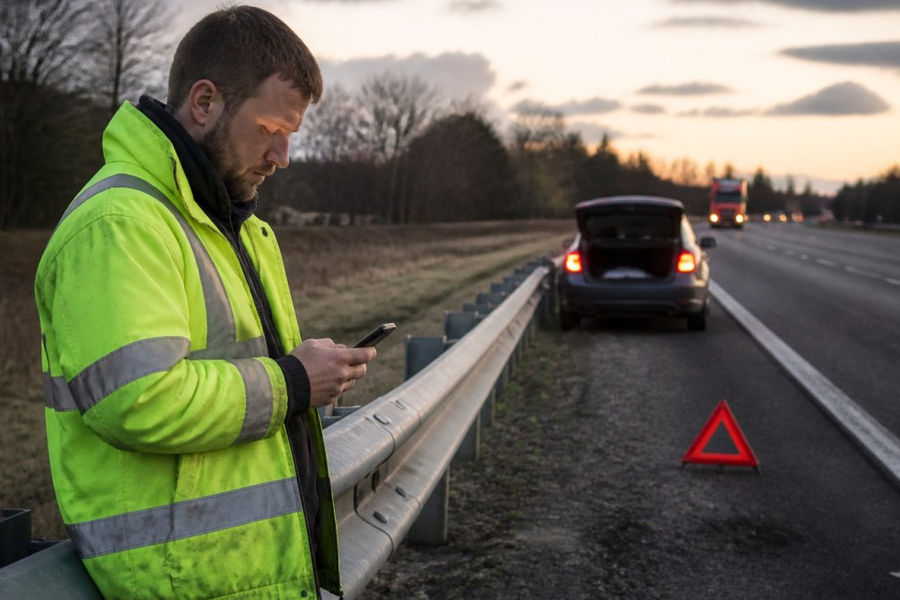
While the recovery vehicle is en route:
Keep your hazard lights on and your seatbelt off only once you're out of the vehicle
Stay visible - a high-visibility jacket earns its place in the boot
Don't attempt repairs on a live carriageway, ever
Keep children and pets well away from the road edge
If you're on a smart motorway and can't reach a refuge area, call for assistance immediately and stay in the vehicle with belts on until instructed otherwise. The rules differ by road type, and the National Highways guidance on breakdowns sets out what to do on each.
Watch Out Never stand between your vehicle and passing traffic, and never try to push a car off a motorway lane by hand. Both cause serious injuries every year. Wait for a professional operator with the right equipment.
Vehicle Recovery After an Accident
Accident recovery is a different job from a breakdown. A damaged vehicle may not roll, steer or brake safely, and it may be leaking fluid or have deployed airbags. Tell the booking team it is accident recovery, not a standard breakdown, so the right recovery vehicle and equipment are sent.
Before You Book
Before you book, make sure everyone is safe and the emergency services have been called if anyone is hurt. Exchange details as required, and photograph the damage and scene.
Once safe, submit the online request. Describe the vehicle's condition honestly: which wheels turn, whether it drives at all, whether it is blocking a lane, and whether fluid is leaking. A car with a smashed front end and deployed airbags may need a flatbed with a winch, while rear-end damage may be recoverable on a spec lift.
What to Enter in the Online Form
Choose accident recovery as the job type, then complete the collection location and destination fields as normal. In the fault description, add:
Which wheels roll and whether the steering turns
Whether the keys are with you and whether the steering lock is engaged
Whether the vehicle is in a car park, on a verge, in a ditch or on a carriageway
Whether debris, fluid or damaged barriers affect access
Whether the police have attended and whether the vehicle has been moved
If the police or a highways contractor has moved the vehicle to a recovery yard, enter that yard as the collection location and note the police reference number. Recovery yards often have restricted hours, so mention if you need the vehicle moved outside them.
Insurer Direct Billing
Direct billing to insurers matters most here. Rather than paying for accident recovery yourself and chasing reimbursement, arrange for the cost to be billed to your insurer where your policy allows, one less thing to manage while dealing with a claim.
To set up direct billing, you will usually need your policy number, your insurer's claims line reference and confirmation that recovery is covered. Enter these in the booking form's insurance field or tell the operator when they call.
After the Vehicle Is Collected
Ask the operator where the vehicle is being taken and get the name and address of the receiving garage or storage yard. Keep the recovery receipt and any condition report, because your insurer will likely ask for them. If the vehicle is written off, the operator can usually store it until the insurer's assessor has seen it, but storage charges may apply after an agreed period.
Watch Out Never stand between a damaged vehicle and passing traffic, and do not try to move an accident-damaged car by hand. Fluid leaks, deployed airbags and structural damage can make a vehicle unpredictable. Wait for a professional operator with the right equipment.
Online Booking vs Phone Enquiries: Which to Use
Use online booking when you have signal, know your location and want a written record of the quote.
Situation | Best route | Why |
Standard breakdown, good signal | Online booking | Fast, written quote and confirmation |
Unsure of exact location | Phone | Operator can help pin down the collection point |
Vehicle in a live lane | Phone | Urgency and safety guidance needed immediately |
Accident with damage | Phone, then online | Condition needs discussing before dispatch |
Fleet with multiple callouts | Phone | Coordination across several vehicles |
Booking ahead for an event | Online | Details and dates captured in writing |
Online booking wins on paperwork: the recovery quotation, booking confirmation and contact details in one thread. Phone enquiries win on nuance.
For fleet managers, the calculation is different again. Multiple immobilised vans need one point of contact and a plan, not six separate web forms.
Frequently Asked Questions
How do I book emergency vehicle recovery online?
Open the recovery provider's booking page and enter your collection location, destination, vehicle registration, vehicle type, and a short description of the fault. Add your contact number and any access notes for rural or restricted locations. Submit the request and wait for a booking confirmation with a reference number and estimated arrival window. If your vehicle is blocking a live lane, call the emergency line instead so the operator can prioritise your recovery request.
How quickly can emergency vehicle recovery arrive?
Response time depends on operator availability, your location, and traffic. Gales Recovery commits to a 45-minute response time across its service area, but rural addresses, motorway closures, and peak periods can extend this. When you book, ask for an estimated arrival window and a contact number for the recovery operator assigned to you. If you are on a motorway or in an unsafe position, call the 24/7 emergency line rather than relying on the online form alone.
Can I book vehicle recovery online after an accident?
Yes, provided the scene is safe and emergency services have been notified where needed. Exchange details with any other parties, photograph the damage, and note the collection location before submitting your booking. Accident recovery often needs a flatbed recovery vehicle, so state clearly that the car is damaged and may not roll or steer. Gales Recovery handles accident recovery and can arrange direct billing to your insurer, which reduces the need to pay upfront and claim back later.
What should I do while waiting for vehicle recovery?
Move to a safe position away from traffic, switch on hazard lights, and place a warning triangle if it is safe to do so (never on a motorway). Keep your phone charged and stay with your vehicle only if it is safe. Note your booking reference and keep your phone nearby so the recovery operator can reach you. Avoid standing between your car and oncoming traffic, and never attempt repairs on a live carriageway.
CALL US

Comments